
Adaptability: The Fool’s Greatest Strength
Because becoming the Hero begins with stepping into the unknown
The Fool begins the journey without knowing exactly where the road will lead.
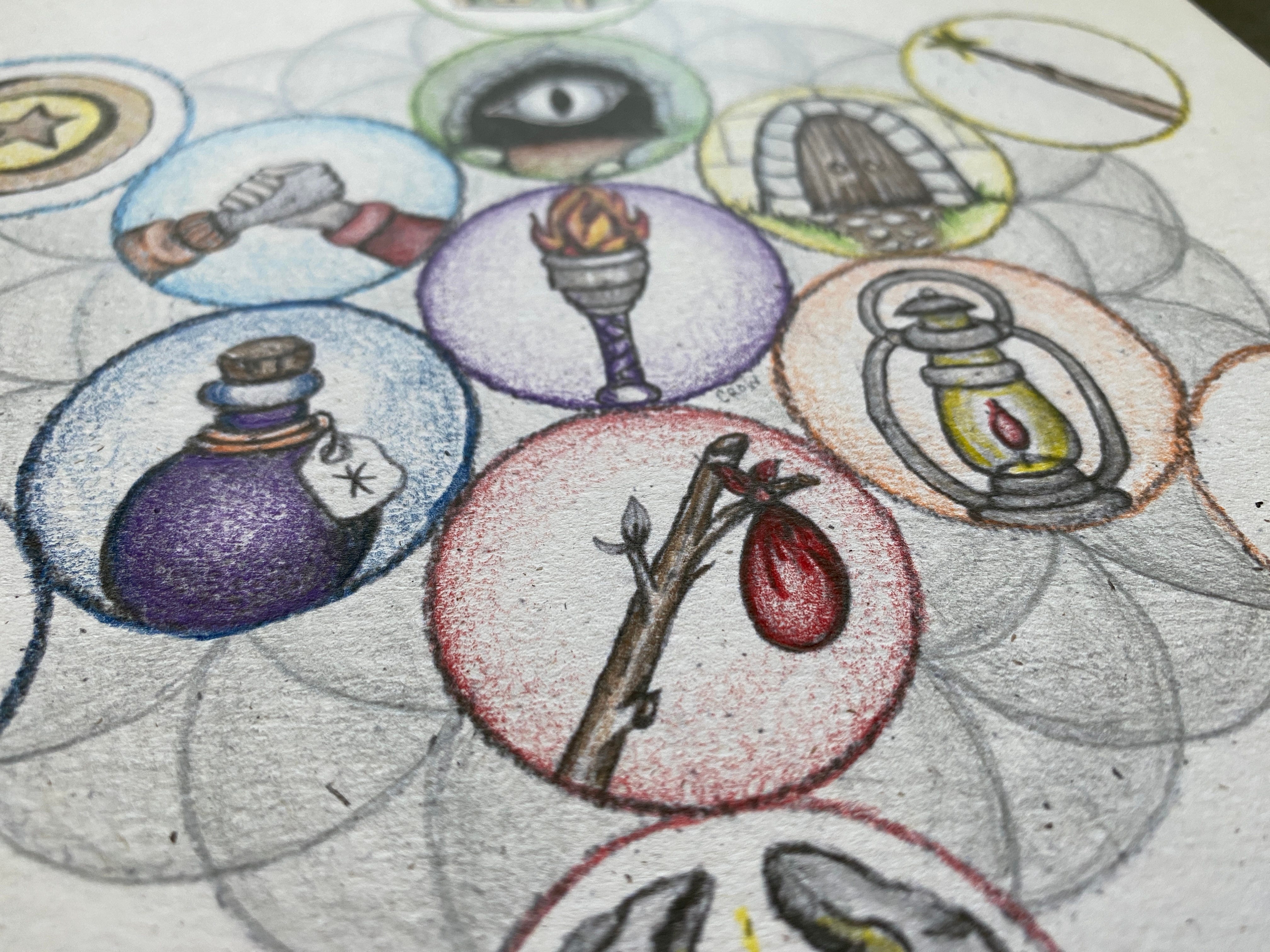
A small bundle hangs from a walking stick. One foot is already lifted. The landscape ahead is unfamiliar, and the next step may carry the Fool toward possibility, difficulty, revelation, or all three.
From the outside, this can look like innocence. It can even look like foolishness.
But the Fool possesses something many experienced travelers gradually lose.
The willingness to adapt.
The Fool does not begin with a rigid map of how life must unfold. There is an intention, perhaps even a calling, but not a guarantee. The journey requires curiosity, responsiveness, and the ability to reconsider what once seemed certain.
In many ways, adaptability is what allows the Fool to become the Hero.
The Journey Changes the Traveler
Joseph Campbell’s Hero’s Journey is often described as a sequence of recognizable stages. The Hero receives a call, crosses a threshold, encounters mentors and challenges, faces an ordeal, claims a treasure, and eventually returns transformed.
We tend to imagine this journey as forward movement.
Yet anyone who has lived through a genuine transformation knows the path rarely moves in a straight line.
The Hero pauses. Doubts. Backtracks. Revises the plan. Discovers that the obstacle is not what it first appeared to be. Finds help in an unexpected place. Learns that the treasure being sought is different from the treasure that is actually needed.
Transformation is not simply the result of persistence. It is the result of remaining responsive while we persist.
The Fool can move through uncertainty because the Fool has not yet become overly attached to one identity, one method, or one outcome. This openness is not a lack of commitment. It is the capacity to remain in relationship with what is unfolding.
Adaptability asks:
What is changing?
What is this moment showing me?
What part of my original plan still belongs?
What needs to be released, revised, or reimagined?
What is the next step now?
The Fool listens for these answers while walking.
Adaptability Is Not Aimlessness
There is a difference between being adaptable and having no direction.
Adaptability does not mean abandoning your purpose every time the road becomes difficult. It means allowing your approach to evolve while remaining connected to what matters.
In the Quantum MeMoir framework, Purpose rests at the center of the journey.
Purpose is not necessarily a fixed destination. It is the organizing principle that helps us interpret the experience. It gives us something to return to when the path becomes confusing.
Around that center, the journey moves through a series of inner perspectives and outer actions.
We Ground before we move.
We Intend before we act.
We Observe what is actually happening.
We Connect with the emotions, relationships, fears, and deeper meanings within the experience.
We Express what wants to emerge.
We Refine what we have learned.
Adaptability lives within this movement.
It allows us to shift between reflection and action. It reminds us when to advance and when to pause. It helps us recognize that a strategy which worked during one stage of the journey may not belong in the next.
The Fool does not carry every tool at the beginning. The necessary tools are discovered along the way.
Every Obstacle Contains New Information
Early in the journey, the Fool encounters a block.
The original path is interrupted. Something does not work as expected. A problem appears where there once seemed to be an open road. Our first response may be to force the original plan. We push harder. Repeat ourselves. Try to overpower the obstacle through effort alone.
Adaptability invites another response.
What if the block contains information?
An obstacle may reveal that we need a new skill, a different pace, an ally, a stronger boundary, or a more honest understanding of the situation. It may show us that the goal is still meaningful, but the route must change.
This is where the Fool begins developing the discernment of the Hero. The Fool learns that changing direction is not always quitting.
Sometimes changing direction is evidence that we are paying attention.
The Mentor Does Not Hand Us a Script
As the journey continues, the Fool meets the Mentor.
The Mentor may be a teacher, an elder, a friend, a book, an experience, or an inner voice that becomes audible at exactly the right time.
The Mentor brings light to what the Fool cannot yet see.
But even the wisest Mentor cannot provide a perfect script for another person’s journey. Advice must be interpreted. Tools must be practiced. Wisdom must be adapted to the circumstances of the traveler.
The Mentor may offer a lantern, but the Fool must still decide where to shine it.
The Mentor may offer a sword, but the Hero must learn when to use it, when to lower it, and when the true task is not to fight at all.
Adaptability allows us to receive guidance without surrendering our agency.
We can learn from those who traveled before us while still responding to the terrain beneath our own feet.
The Threshold Requires a New Version of Us
Eventually, the traveler reaches the threshold. The familiar world ends here.
The skills, assumptions, and identities that carried the Fool this far may not be enough to carry the emerging Hero forward. Thresholds are difficult because they rarely provide complete certainty. We are asked to step into a new role before we feel fully prepared to inhabit it.
This is where adaptability becomes courage.
Courage is not the absence of uncertainty. It is the ability to remain present while uncertainty rearranges us. The Hero is not created by knowing every answer. The Hero is created by becoming capable of responding to what comes next.
The Dragon Is Rarely Defeated the Same Way Twice
Beyond the threshold waits the Dragon.
The Dragon may appear as fear, shame, self-doubt, perfectionism, conflict, grief, or an old survival pattern that once offered protection but now restricts growth.
We often imagine the Hero defeating the Dragon through strength. But some Dragons grow stronger when attacked. Some must be understood. Some must be faced with compassion. Some require a boundary. Some ask us to speak. Others ask us to stop explaining. Adaptability helps us recognize which response belongs to this particular encounter.
There is no universal sword stroke that resolves every inner conflict. The Fool must observe the Dragon, understand its nature, and choose deliberately. This is not passivity. It is discernment.
The adaptable Fool does not merely react from habit. The Fool develops the ability to choose.
The Treasure May Change Shape
At the beginning of a journey, we often believe we know what the treasure will be.
A finished project.
A new relationship.
A successful business.
A healed body.
A clearer identity.
A life that finally unfolds according to plan…
Yet the treasure discovered after facing the Dragon may be something less visible and more valuable.
Self-trust.
Discernment.
A recovered voice.
The ability to rest without guilt.
A willingness to ask for help.
The courage to change.
The capacity to live without controlling every outcome.
The Fool may have started the journey searching for certainty, only to discover that adaptability is the greater treasure. Certainty promises that nothing unexpected will happen. Adaptability reminds us that when something unexpected happens, we can meet it.
Returning Is Another Form of Change
The story does not end with the treasure. The Fool must return as the Hero.
This return is often more challenging than expected because the person who left no longer exists in quite the same way. The traveler comes home carrying new awareness, but the familiar world may still expect the old identity.
The Hero must learn how to express the discovery, share it with others, and integrate it into everyday life. A revelation that cannot be lived remains only an idea.
The return asks us to make the treasure tangible.
How will this insight affect the way I spend my time?
What boundary will change?
What conversation needs to happen?
What practice will help me remember?
What can I create, offer, or share because of what I have experienced?
Adaptability is essential here too. Expression is not a single dramatic decision. It is an ongoing process of adjusting our lives until they more honestly reflect what we now know.
We Are Always Both Fool and Hero
The Fool and the Hero are two expressions of the same traveler.
The Hero carries the wisdom gained through experience.
The Fool carries the openness required to begin again.
We need both.
Without the Hero, the Fool may repeat the same lesson without learning from it.
Without the Fool, the Hero may become rigid, overconfident, or trapped by a former version of success.
Every meaningful journey eventually brings us back to the beginning. We arrive with more wisdom, but we are once again standing before something unknown.
A new purpose.
A new season.
A new challenge.
A new question.
Adaptability allows the Hero to become the Fool again without believing that beginning again means returning to zero.
We are not starting over. We are continuing from experience.
A Map for Your Journey
I created the Fool’s Journey Self-Guided Game as a way to explore these stages of growth through reflection, symbolism, and active imagination.
The illustrated Hero’s Journey Mind Map offers a place to see the journey as a whole, while the accompanying Fool’s Journey Game Board and note pages help you explore the obstacle, mentor, threshold, dragon, treasure, allies, and elixir within your own experience.
The Draw & Tell Flash Cards provide another way into the process. You can select or randomly draw a card, notice the symbol or question that appears, and allow it to reveal a perspective you may not have considered.
These tools are not meant to predict exactly what will happen next. They are designed to help you become more responsive to what is happening now. Because a meaningful map does not remove uncertainty. It helps us meet uncertainty with curiosity.
The Fool steps forward without knowing everything.
The Hero continues because something has been learned.
Perhaps that is the deeper invitation of the Fool’s Journey. Not to control every turn. Not to avoid every Dragon. Not to become so certain of the destination that we stop noticing the road. But to remain awake, curious, and willing to respond.
To carry what serves us. To set down what does not. To receive the next tool when it appears. And to trust that adaptability is not a detour from becoming the Hero. It is how the transformation happens.
Explore the Fool’s Journey Self-Guided Game and Draw & Tell Flash Cards
Watch the overview of the pages and cards included in the set:


